



Not all hair loss is the same, and not all hair loss has just one cause
Generalised, sudden hair loss (telogen effluvium) usually appears without warning and affects hair as a whole; chronic shedding develops gradually over a period of months and reduces hair density. Several different factors are usually involved, so it is crucial to address all of them to restore balance to your hair.
- Genetic predisposition
- Stress
- Habits and lifestyle
- Hormonal changes
- Postpartum
- Dietary deficiencies
- Environmental factors
- Age
Genetic predisposition
This is one of the main factors in androgenetic alopecia, the most frequent form of hair loss. Genetics can make hair follicles more sensitive to DHT (dihydrogen testosterone), an androgen formed by testosterone through the action of the 5-alpha-reductase enzyme. When this predisposition exists, the hair follicle gradually shrinks and hair strands become finer and weaker.

Emotional stress
Your hair mirrors your emotional state and stress. The sustained increase in cortisol levels can alter hair cycle regulation and accelerate the transition from growth phase to shedding phase. As a result, a higher proportion of hair strands stop growing before they should and hair loss can become more noticeable.

Habits and lifestyle
Your daily routine has an effect on your hair. Proper rest is crucial: sleeping less than 6 hours every night can more than double the risk of severe hair loss. Other habits such as high levels of sporting activity increase the body's nutrient requirements, and this can lead to deficits; smoking can also trigger or exacerbate hair shedding.
Hormonal changes
Hormones regulate a large part of the hair cycle, so it will mirror any imbalances. Excessive androgen levels, thyroid gland disorders or the naturally occurring changes at different life stages can make hair move into the shedding phase more quickly, or weaken hair replacement.

Postpartum
Pregnancy and the postpartum period are excellent illustrations of how hormones affect the hair. During pregnancy, high oestrogen levels lengthen the growth phase and hair looks stronger. Following childbirth, the levels of this hormone drop dramatically and a large proportion of the hair moves into the shedding phase. This is a temporary phenomenon and corrects itself after a few months.
Dietary deficiencies
The hair follicle requires a constant supply of nutrients, vitamins and vitamins for healthy growth. If iron, zinc, vitamin D or specific essential amino acids, for example, are missing, the hair can become finer and weaker, its growth phase becoming shorter and shedding more readily. Lack of iron is one of the most frequent deficits, particularly among women.

Environmental factors
Pollution and UV radiation encourage the formation of free radicals that, when present in high levels, create oxidative stress. When these outstrip the body's anti-oxidant defences, the hair follicle suffers: cell damage increases, the hair cycle shortens and hair becomes progressively finer, weaker and more brittle.

Age
Hair ages too. Over the years, hair follicles become less active, the growth cycle shortens and fewer follicles produce hair, so hair grows more finely, more weakly and with less density. When this hair ageing is accompanied by hormonal changes during the menopause and genetic predisposition, hair loses its strength and density more noticeably.
How the hair cycle works
Hair is constantly being replaced. Each follicle has its own pace: while some hair strands are growing, others are in a resting phase and others are shedding. So losing some hair every day is normal; it does not indicate problematic hair loss.
PHASE 1
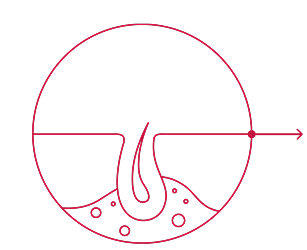
Anagen phase
GROWTH
Lasts for 2-8 years. This is the active part of the cycle, when hair is formed and grows thanks to hair follicle activity. The longer this phase lasts, the longer your hair can grow.
PHASE 2
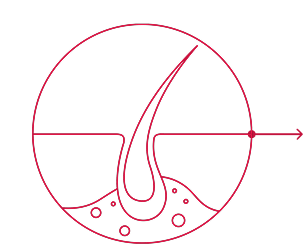
Catagen phase
TRANSITION
Lasts for 2-3 weeks and marks the end of the growth phase. The follicle shrinks, stops being nourished by the dermal papilla and starts moving up towards the surface of the skin.
PHASE 3
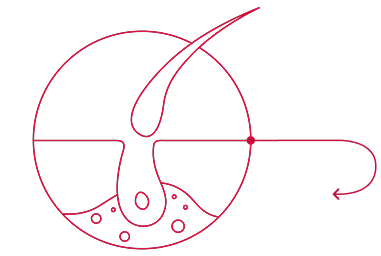
Telogen phase
RESTING AND SHEDDING
Lasts for 2-3 months. The hair follicle rests and the hair remains fixed to it until ultimately detaching ─ known as the exogen phase ─ and letting a new hair strand grow.
The secret to strong, thick hair lies in balance

Strong, thick hair being constantly renewed
Around 85-90% of your hair is growing, and only a small proportion of it is shedding naturally. The follicle is in optimum conditions for each hair strand to emerge strong and then be replaced by a new one which is just as healthy and resilient.
Balanced hair cycle
Approximate distribution of hair cycle stages in healthy hair.


Anagen
GROWTH

Catagen
TRANSITION

Telogen
RESTING AND SHEDDING
*Jimenez et al. 2024

More hair is being lost than replaced
When the hair follicle is, for whatever reason, not getting what it needs, hair suffers and its natural cycle is upset: it forms more finely, it grows for a shorter time, and sheds before it should. Over time, its replacement is insufficient and you end up noticing that your hair is thinning.
This is what you may notice with your hair:

Do you want strong, thick hair? Pay attention to the growth phase
If you want to keep your hair thick, or restore its thickness, it's not enough to just lose less of it. You also need to focus on hair follicle activity: help it to produce new hair strands, and help existing strands to grow for long enough.
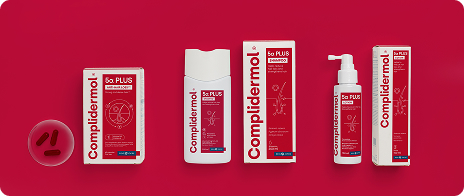
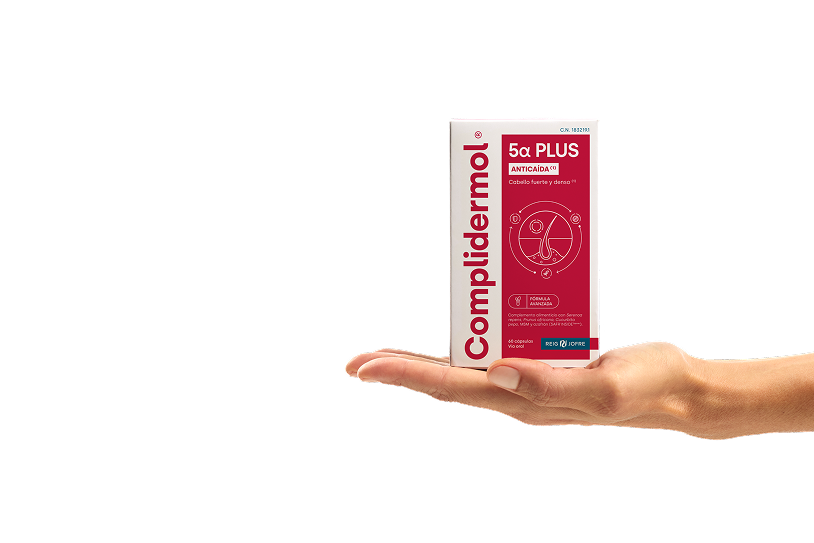
We are launching the advanced formula of Complidermol® 5 Alfa PLUS!
We have moved to the next level in order to address more causes of hair loss with a single formula that now includes two new, patented ingredients: baicalin and saffron.
A hair loss routine for balanced hair
The Complidermol 5 Alfa PLUS hair loss routine combines capsules, shampoo and a new lotion to strengthen your hair inside and out.